Ryan McDonough

Founder, Sometime Artist

CFO and co-founder @Accompany, acquired by @Cisco. Turnaround CFO @Ning, sold to Glam Media. Former seed VC. McKinsey trained. @Wharton School and @Haas School of Business.

Follow

TINKERING

Star Blazers: Building the Space Battleship Yamato, and giving it a little life.

  
Tinkering

Building the Space Battleship Yamato, and giving it a little life.


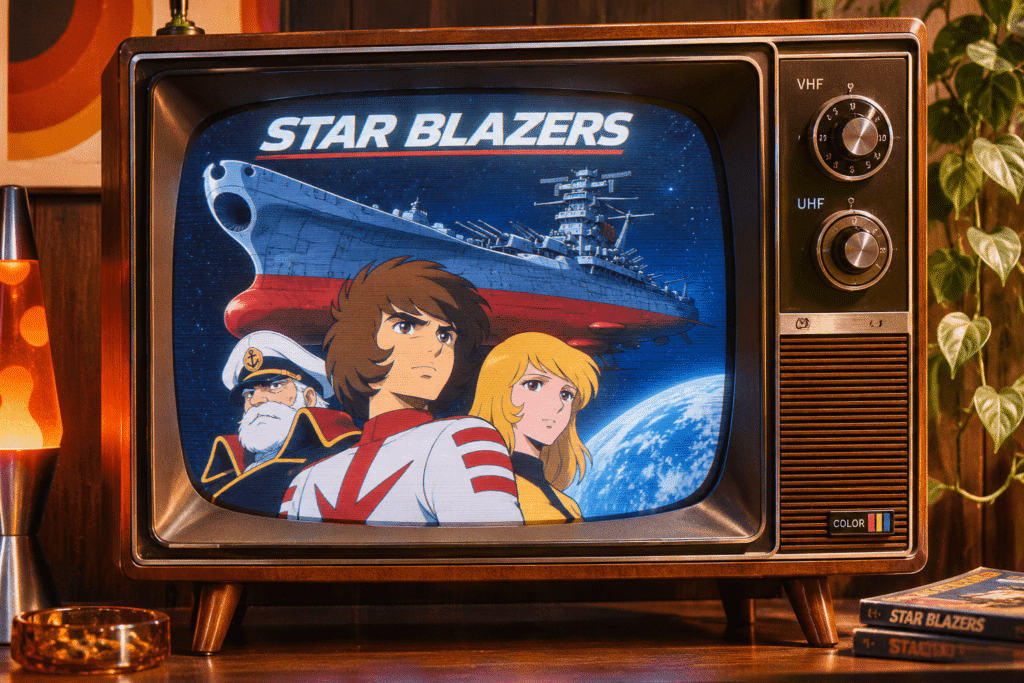
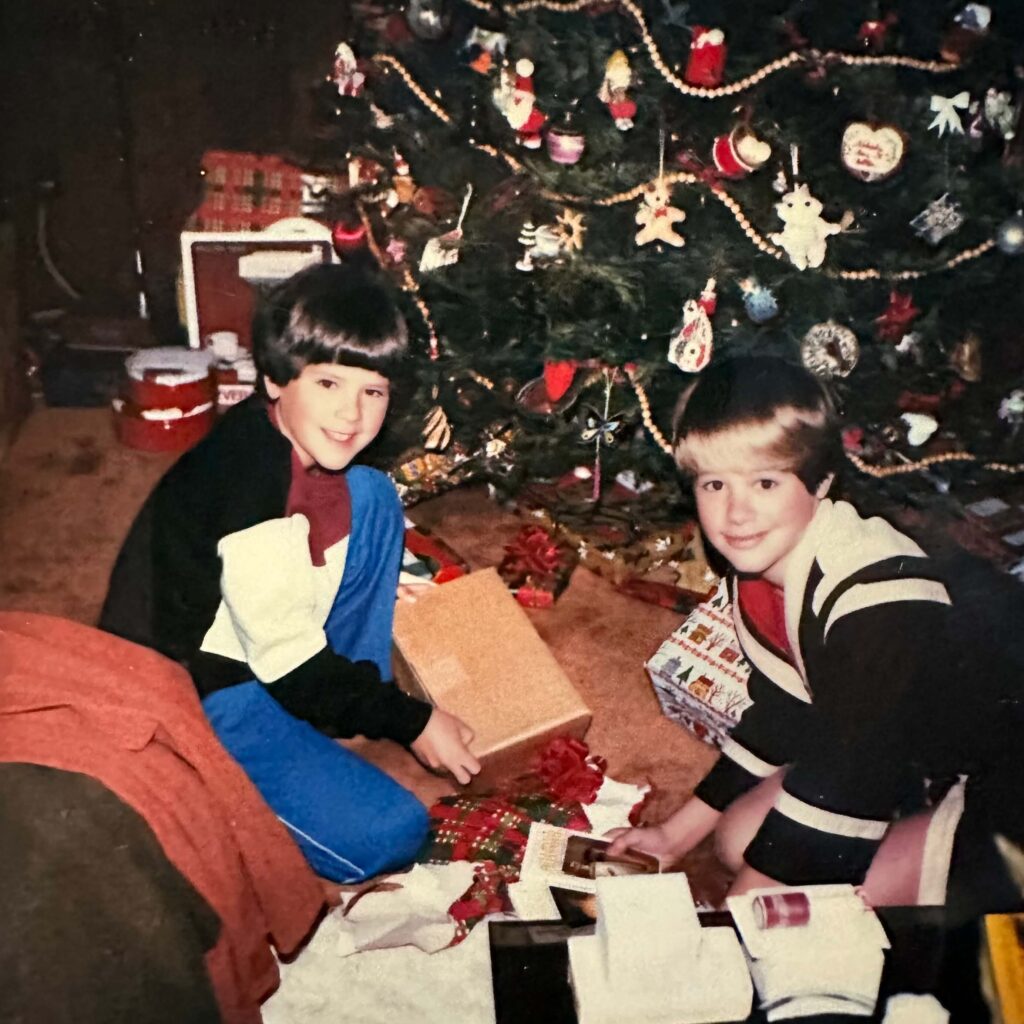
I can remember plenty of television shows from my childhood. But the first one I actually remember watching was Star Blazers.


My brother and I shared a room, and somewhere in that room, on a television that was almost certainly smaller than the screen I’m writing this on, we watched the adventures of the Space Battleship Argo.

For those unfamiliar with the show, Star Blazers was the American adaptation of the Japanese anime Space Battleship Yamato.


It followed a desperate mission to save Earth, undertaken aboard a resurrected World War II battleship that had been transformed into an interstellar spacecraft.


A battleship. In space. With a Wave Motion Gun.


For a kid, it was pretty hard to improve on that premise.


Decades later, I decided it was time to bring the Argo back.

The series premiered in the San Francisco Bay Area on September 17, 1979, as part of the weekday show Captain Cosmic on KTVU 2.

First, Build a Battleship

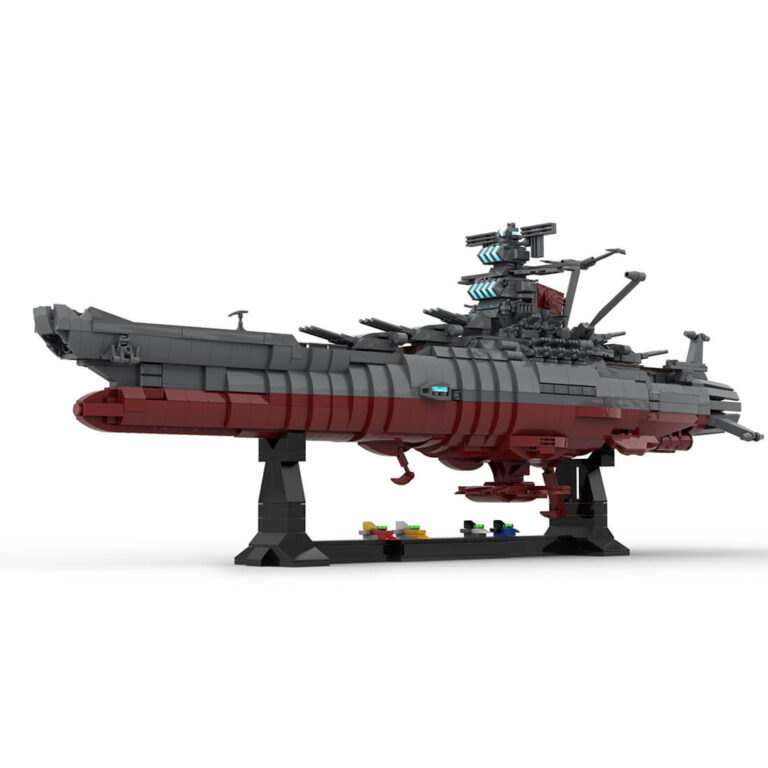
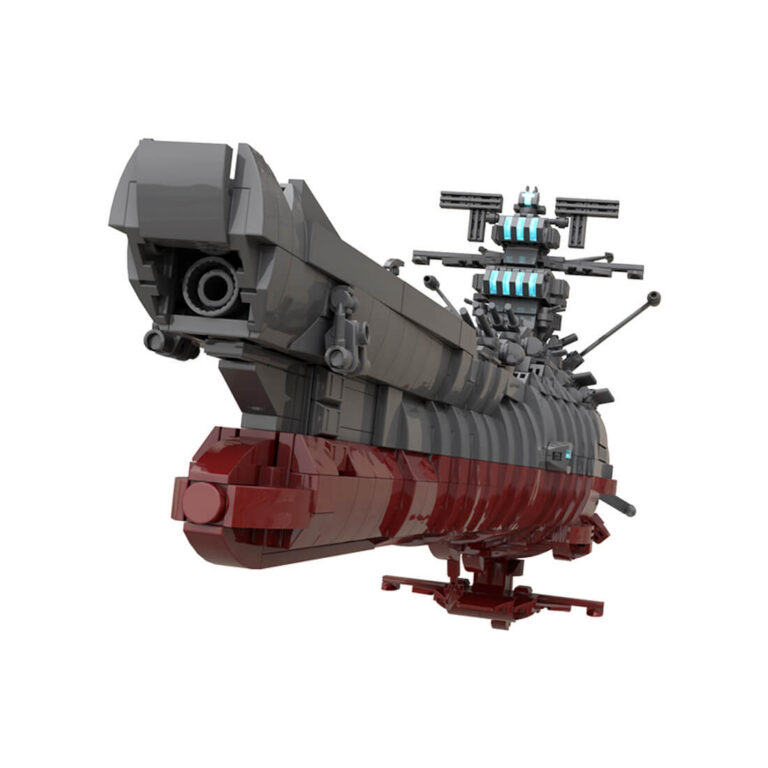
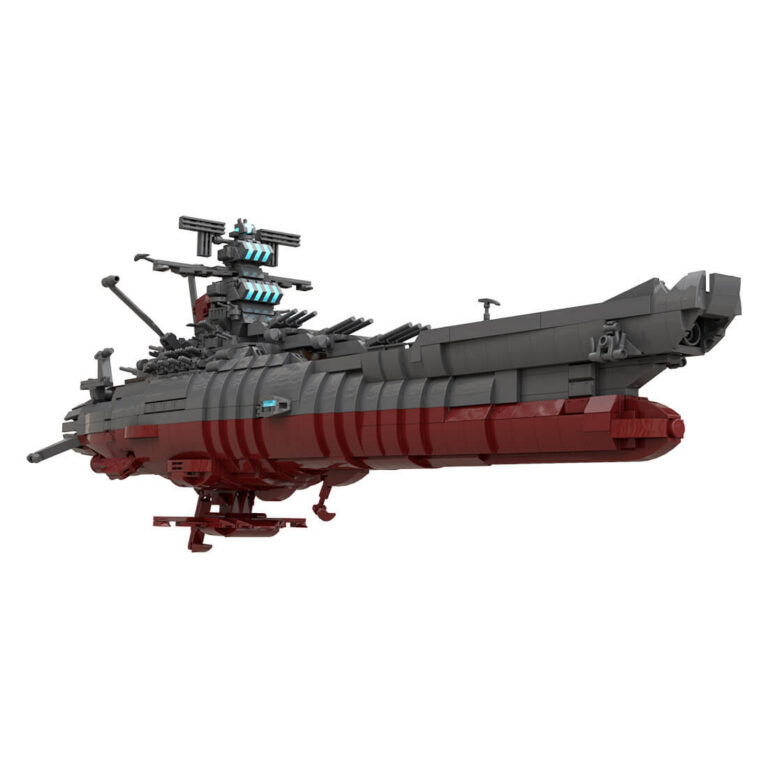
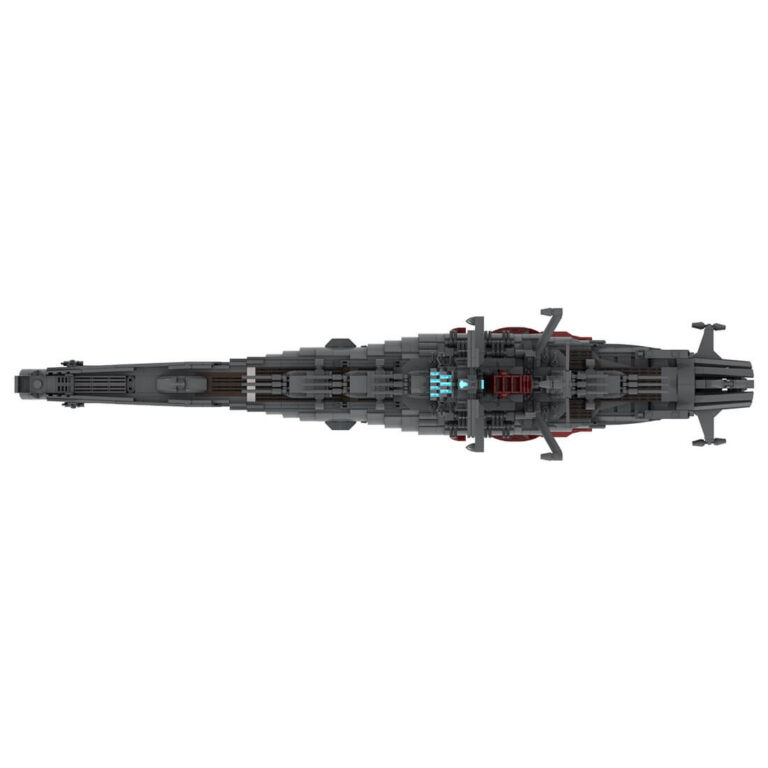
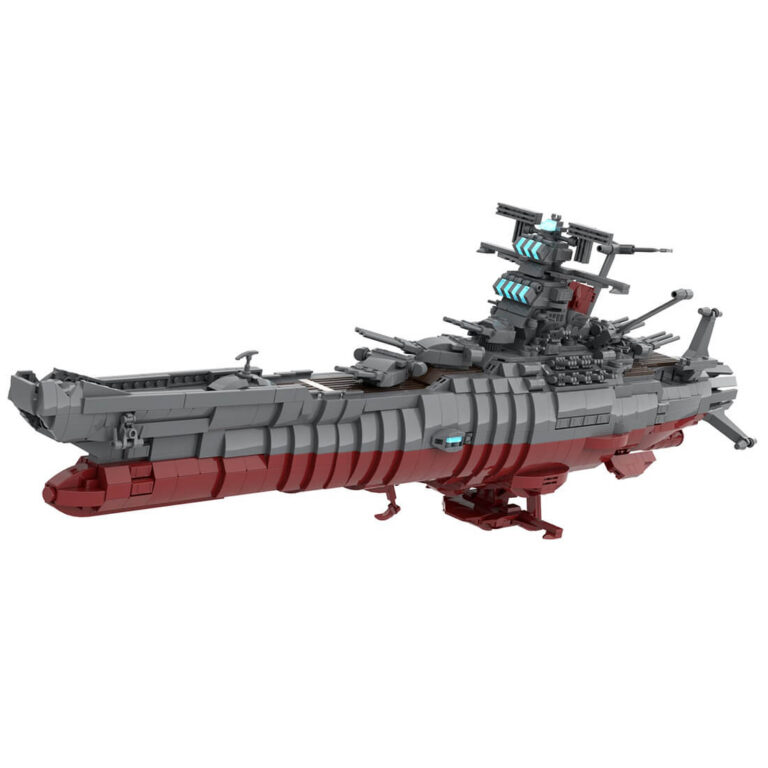
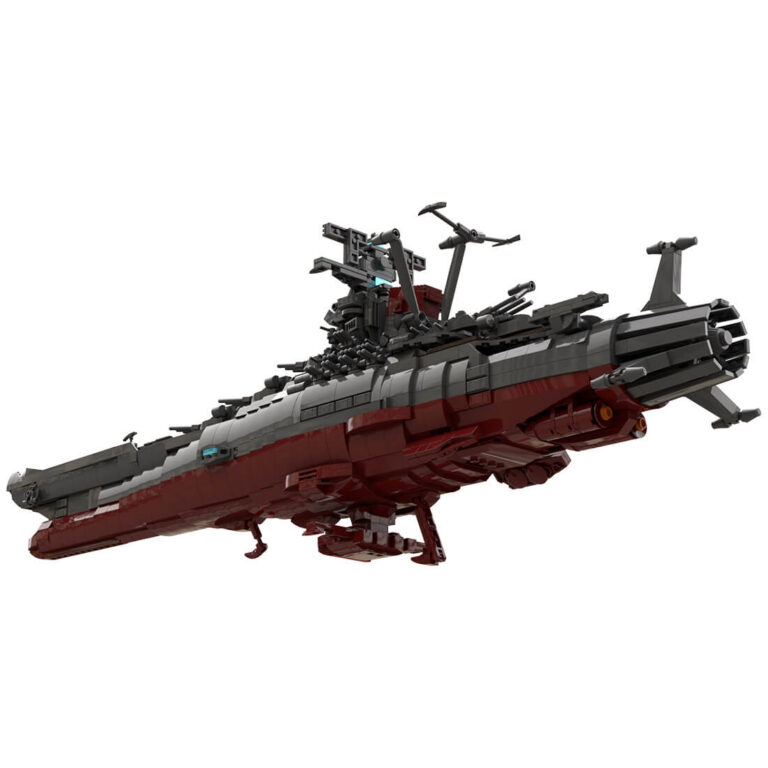
I found a remarkable LEGO-compatible model of the Yamato: a 2,434-piece build measuring roughly 27 inches long.


It’s a wonderfully improbable object. The distinctive gray hull, red underside, towering superstructure, and enormous forward cannon are all there. And at that size, it has the presence to be more than another model sitting on a shelf.


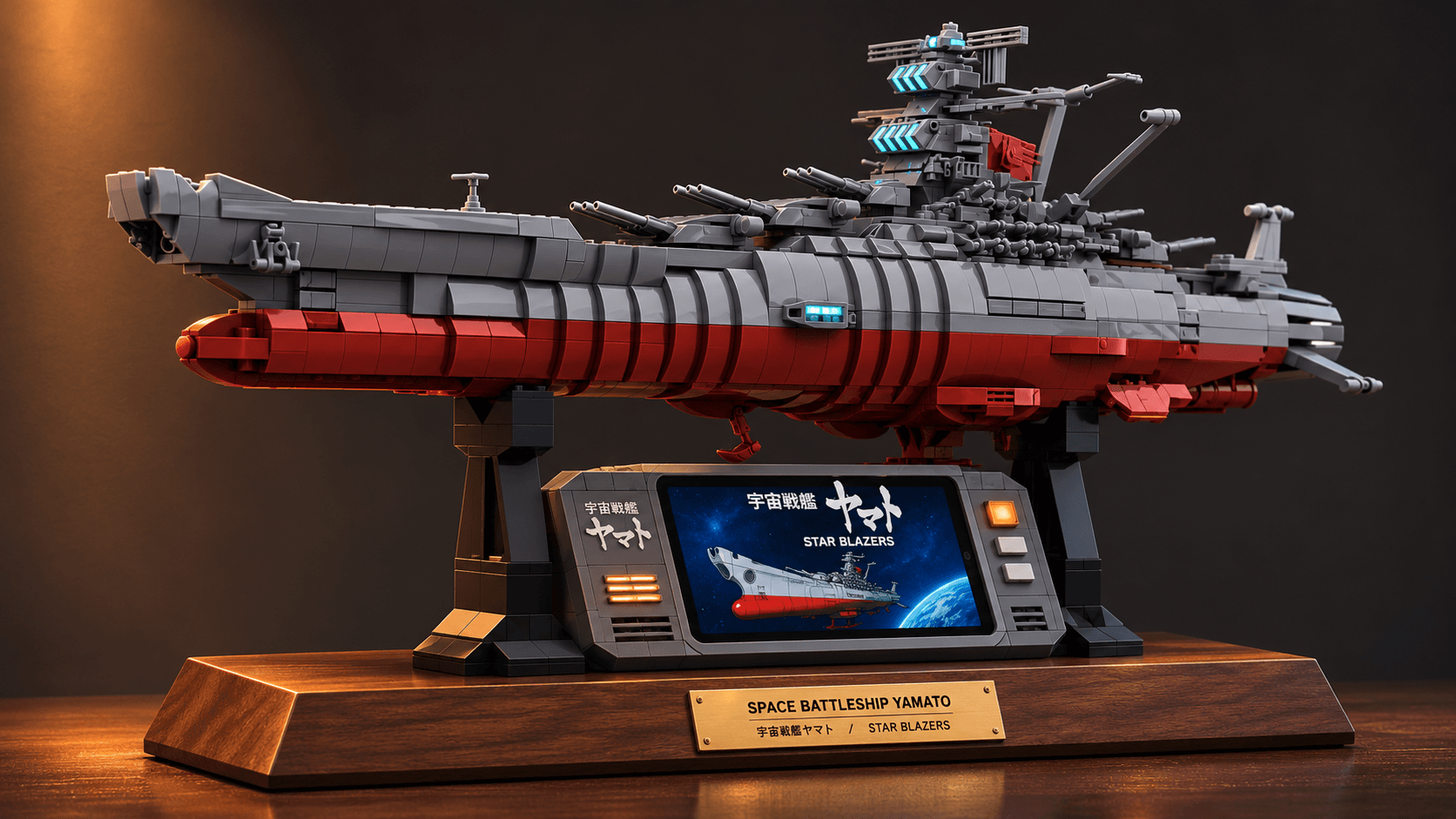
The plan is to mount the completed ship on its black brick supports, atop a custom walnut display base approximately 30 inches long. A small brass plaque will provide the context.


STAR BLAZERS

The first television show I remember.

Watched with my brother, in the room we shared.


That’s really the point of the whole exercise.


But, naturally, I couldn’t leave it at that.

A Little More Than a Display Stand

Once I started thinking about the presentation, I realized there was a wonderful opportunity beneath the ship.


What if the display base included a small computer terminal? Not a generic tablet displaying a slideshow, but something that looked as though it belonged on the bridge of the Yamato itself.


I ordered an inexpensive seven-inch Android tablet, with a 1024 × 600 display, and began designing a custom housing made from gray LEGO bricks.


The terminal will sit beneath the hull, integrated with the model’s existing support structure. The idea is for it to feel like part of the ship’s ground-support equipment, rather than an electronic device awkwardly attached afterward.


And since I already had a small USB controller with three buttons and a rotary volume knob left over from another project, I had the beginnings of a physical control panel.


Previous episode. Play/pause. Next episode. Volume.


Suddenly, this was becoming a much more interesting display.

Building the Earth Defense Force Console

Note, app is designed for rendering well on a 7″ Onn Android tablet.  https://starblazers.lovable.app/

The next step was to create the software.


With ChatGPT helping develop the visual concepts and Lovable turning them into a working prototype, I started building a custom Star Blazers console.


The interface takes its cues from 1970s Japanese science fiction: deep navy backgrounds, glowing cyan schematics, amber instrumentation, green radar displays, and just enough retro-futuristic typography to suggest that somebody at Earth Defense Force headquarters designed it.


There are four primary experiences.


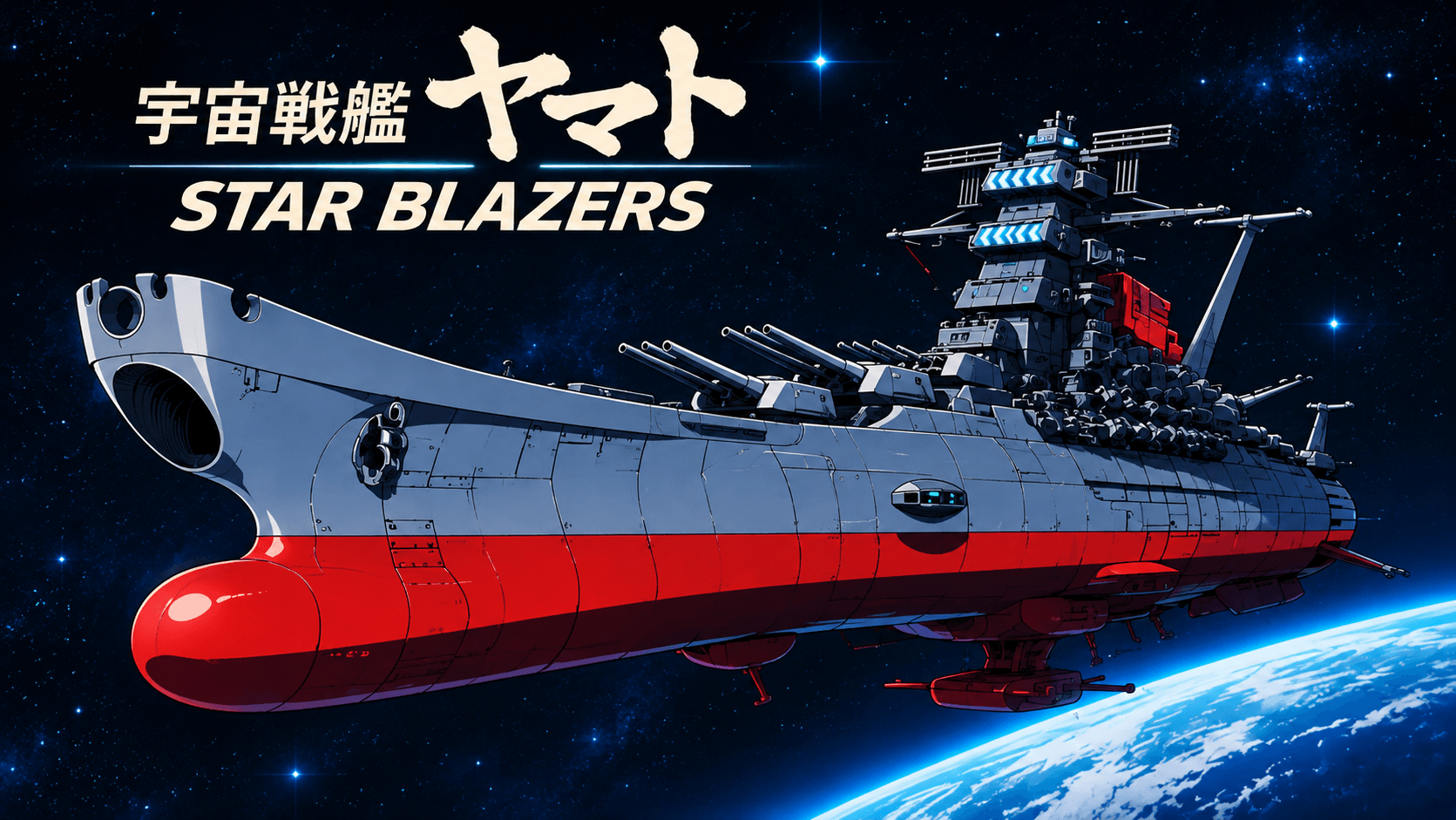
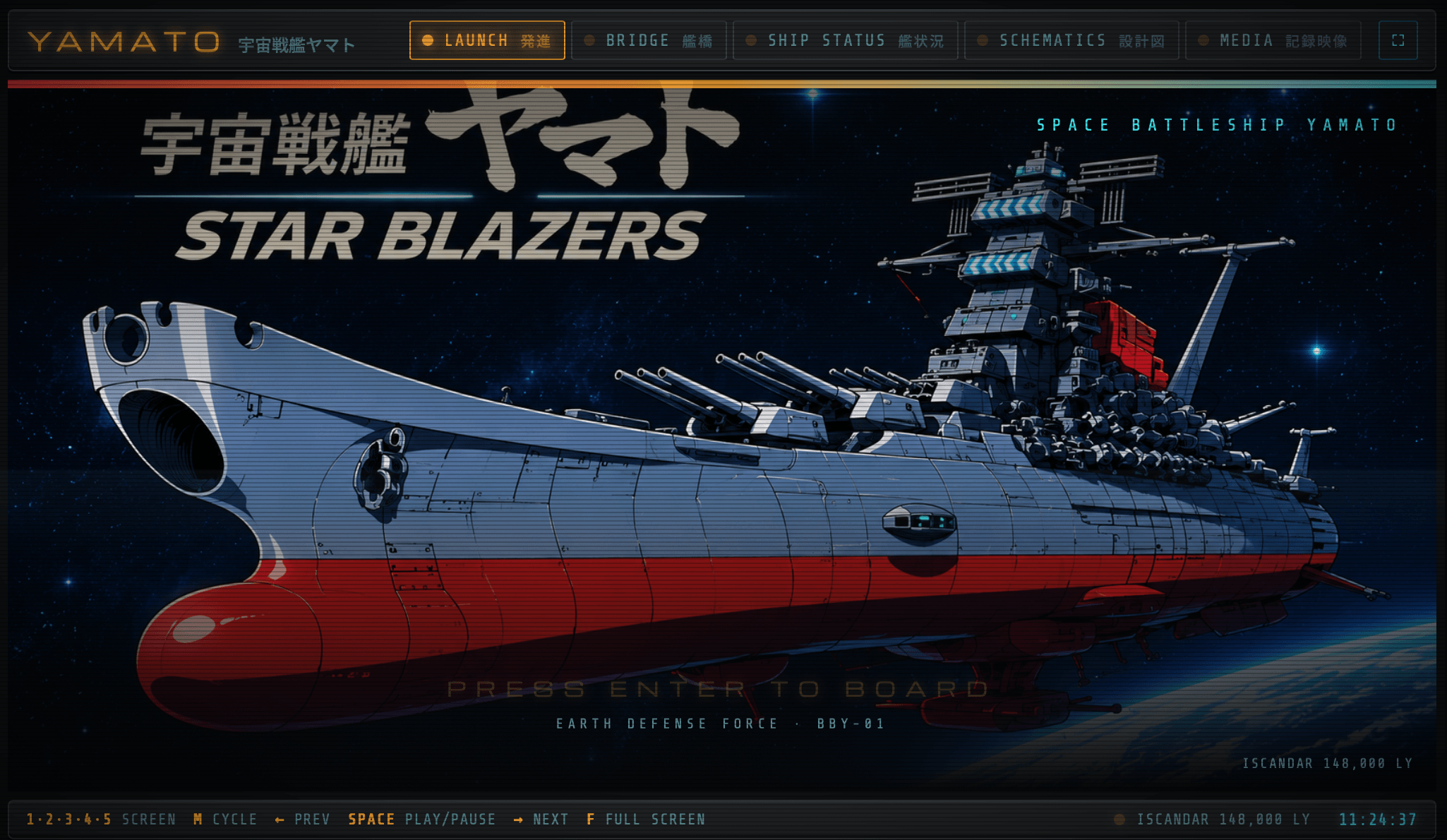
The Launch Screen

A cinematic portrait of the Yamato against Earth, with its original Japanese title and the familiar Star Blazers name. A little motion in the stars and lighting gives it life without turning it into an obnoxious screensaver.


The Living Bridge

This is my favorite idea.


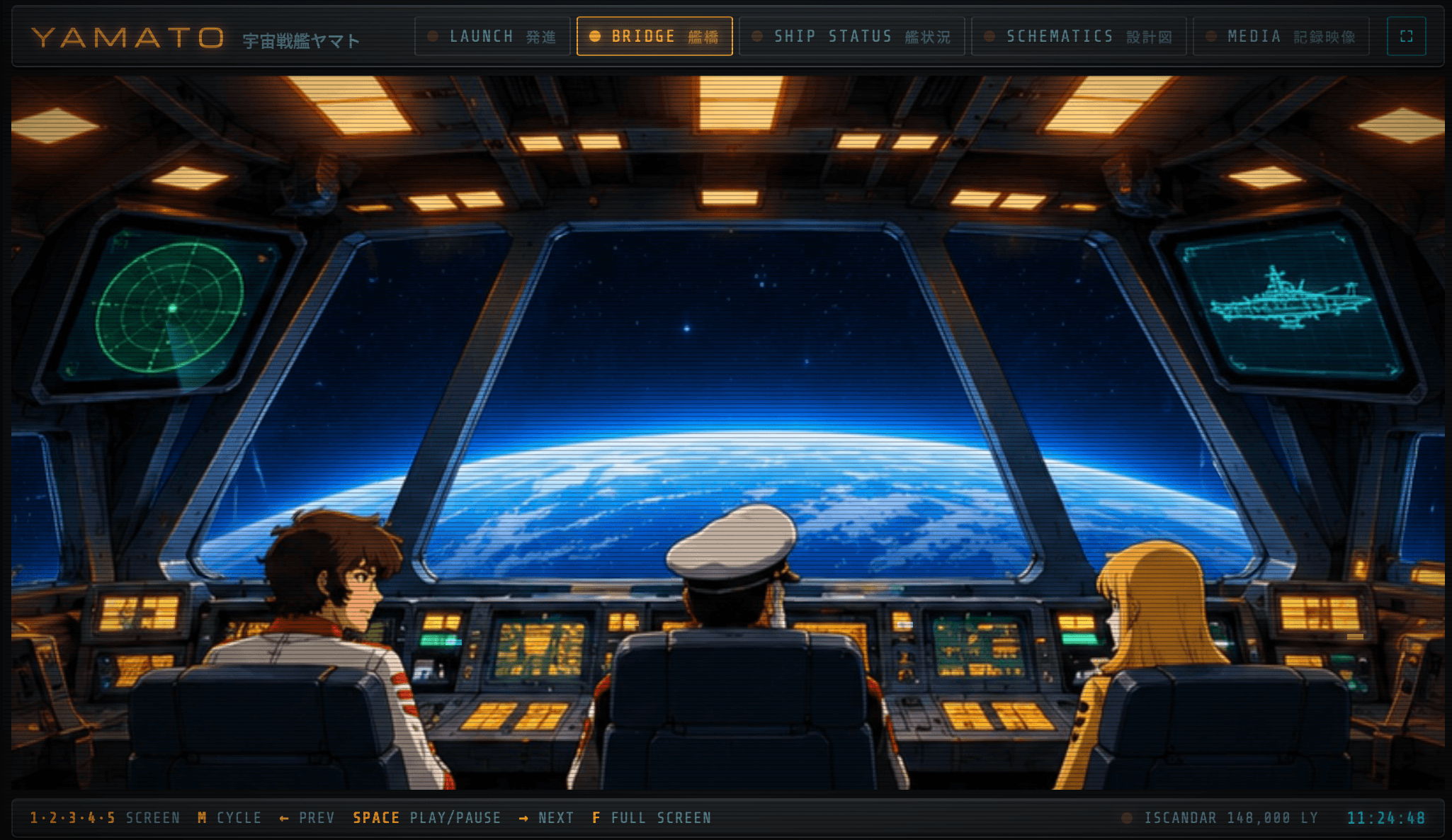
Imagine looking over the shoulders of the bridge crew as they gaze out toward Earth. The instruments quietly blink. A radar screen sweeps. The overhead lighting changes almost imperceptibly.


Every so often, one of the characters turns their head or shifts in a chair.


Nothing dramatic happens. That’s the beauty of it.


Rather than watching a short video loop, the goal is to create a scene that feels inhabited—a tiny window into a spacecraft going about its business.


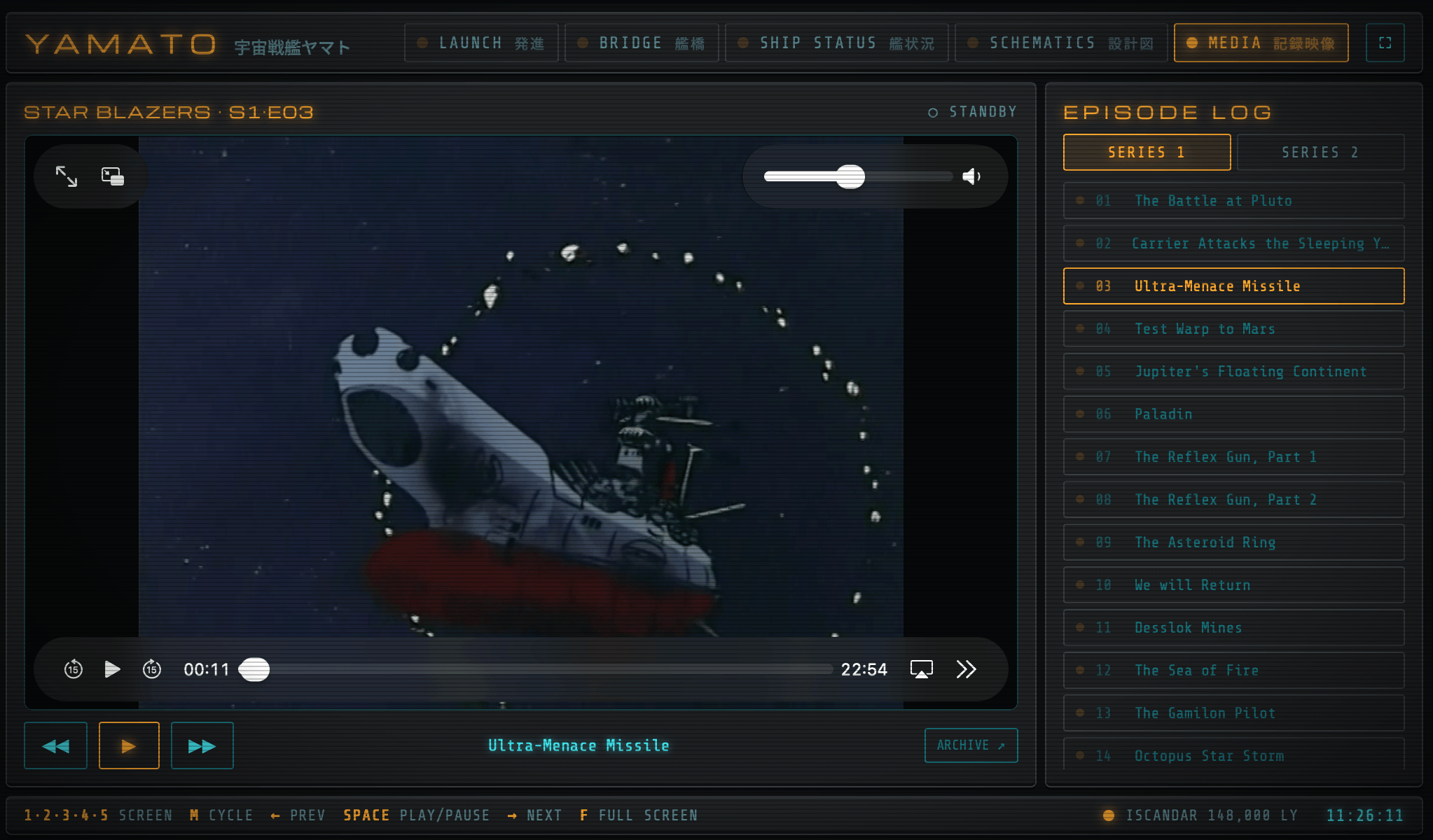
The Episode Archive

I also found a source for the original Star Blazers episodes, which opens up the possibility of keeping the video files locally on the tablet.


The app can then become a self-contained episode library, with thumbnails, descriptions, playback history, and physical controls.


No streaming menus. No recommendations for something completely unrelated. Just the Argo and its mission to Iscandar.


Ship Systems & Schematic

And, of course, a proper battleship needs diagnostics.


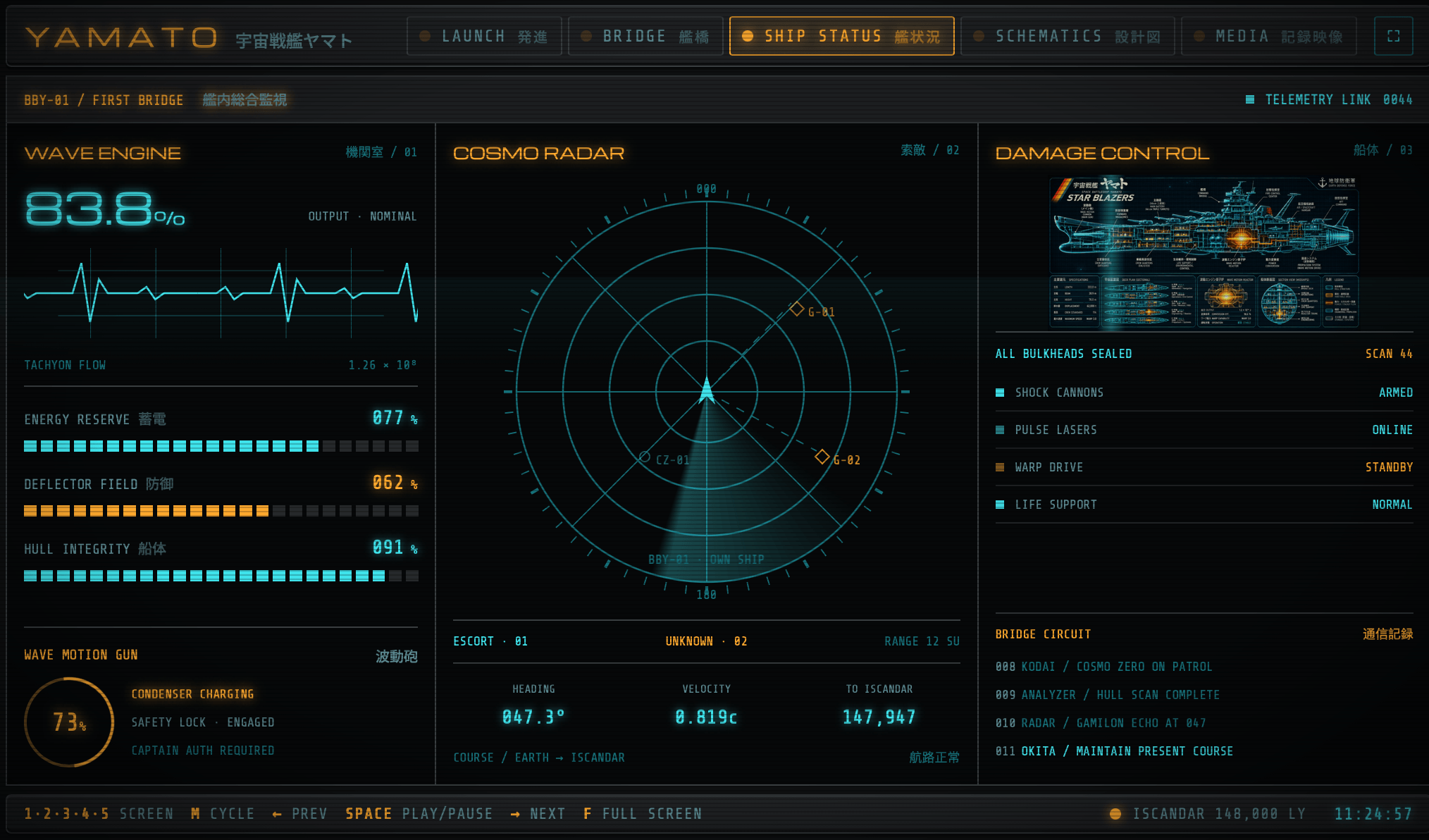
The Systems screen includes a glowing wireframe of the Yamato, animated radar, fictional reactor readouts, and status displays for the Wave Motion Engine and other ship systems.


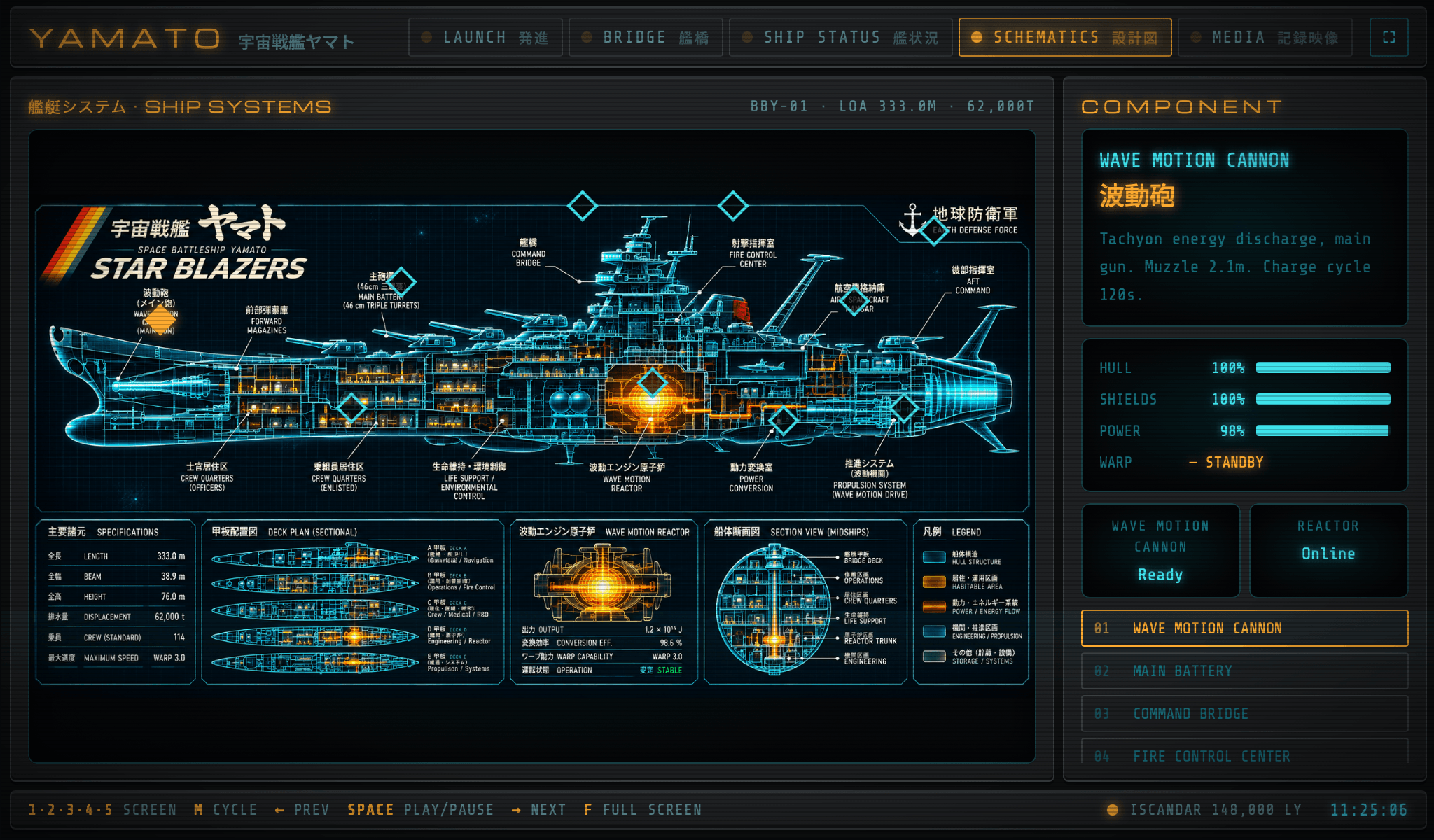
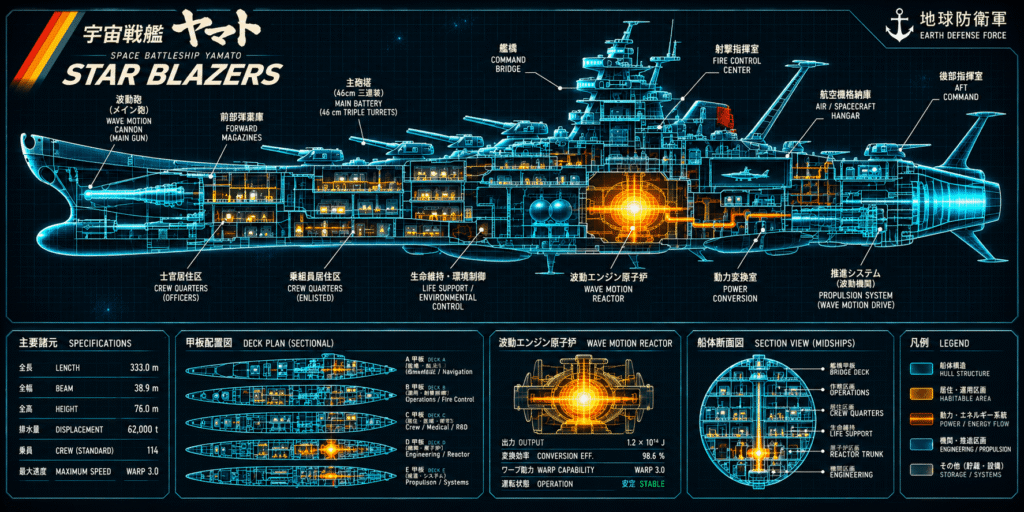
While researching the design, I discovered a wonderful archive of original Yamato technical cutaways, showing the internal compartments, machinery, hangars, and crew spaces.


That led to a more elaborate technical blueprint, complete with an illuminated reactor and sectional diagrams.


Tap the ship schematic and the detailed cutaway opens for closer inspection.


It’s completely unnecessary.


Which is an excellent reason to include it.

Star Blazers wave motion gun

Early ’80s Christmas 

App Screenshots

From Pixels Back to Plastic

One of the things I enjoy most about these projects is the way digital and physical design start influencing each other.


The walnut base and brass plaque give the model the feel of a museum artifact. The LEGO control-panel housing connects the tablet visually to the ship. The animated software makes the whole thing feel less like a static collectible and more like a tiny functioning world.


And the original television episodes connect it all back to why I wanted to build it in the first place.


The technology is decidedly modern. The emotional reference point is somewhere in the late 1970s.


That combination is pretty much my happy place.

The Mission Continues

At the time of writing, the ship build and physical installation are still ahead of me, while the custom software is taking shape in Lovable.


There are plenty of details left to solve: the tablet mounting, the LEGO enclosure, USB controller compatibility, local video playback, and the subtle animation that will make the bridge feel convincing.


I’ll update this as the pieces come together.


But I already know what I want the finished piece to accomplish.


I want to walk past it, see the Argo suspended above its little glowing command console, and be transported for a moment back to the room I shared with my brother.


Somewhere out there, the Wave Motion Engine is still running.

Project Notes

  • Model: Space Battleship Yamato MOC-81382 — 2,434 pieces, approximately 27 inches long
  • Display: Custom walnut base, LEGO-compatible supports, and brass identification plaque
  • Computer: onn seven-inch Android tablet, 1024 × 600 display
  • Controls: Three-button USB controller with rotary volume control
  • Software: Custom Star Blazers interface prototyped in Lovable
  • Live prototype: starblazers.lovable.app
  • Technical reference: Cosmo DNA — Yamato Cutaway Art
  • Status: Work in progress